Baby boom among rare and threatened animals at Pairi Daiza
Pairi Daiza, the 80-hectare Garden of Wonders in Belgium, repeatedly awarded the title of 'Best Zoo in Europe', most recently in 2025, was able to accompany a series of exceptional births and arrivals.
.jpg)
Since the beginning of 2026, Pairi Daiza has welcomed several births of species with significant conservation value from the IUCN Red lists (International Union for Conservation of Nature): Two golden snub-nosed monkeys, Pairi Daiza is the only institution in Belgium to host and present this rare, endangered species; two Vietnam pheasants, a species considered potentially extinct in the wild; two Lammergeyers, an example of a successful European reintroduction programme; and four Ring-tailed lemurs, an endangered species of lemur from Madagascar.
Next to these births at Pairi Daiza, we can also announce the arrival of a very rare animal. This week an exceptional young male has arrived from the Tierpark in Berlin: the Bear cuscus calf Manik.
These little wonders of nature reflect Pairi Daiza's dedication and love to nurture and protect diverse species.
Rare, young animals in the Oasis conservatory.
Since 2 June, Manik has been discovering his new habitat. He is a young bear cuscus, a rare marsupial species found exclusively on the Indonesian island of Sulawesi and several surrounding islands. Born at Tierpark Berlin in 2024, he represents an important addition to the European population of this species, still under-recognised despite its conservation importance.
Bear cuscuses are very rare in zoological institutions worldwide, and relatively little is still known about their biology and reproduction. In the wild, they are threatened by deforestation and illegal hunting, despite being legally protected in Indonesia.
In April, two young Vietnam pheasants also hatched at Pairi Daiza. Just before emerging from their eggs in an incubator, they were carefully returned by their caretakers to their nest, close to their parents in the Oasis greenhouse.
These discreet and vulnerable birds are among the rarest pheasant species in the world. According to the IUCN Red List, they are "critically endangered", and may even have already disappeared in the wild. That is why Vietnam pheasants are part of a European EEP (EAZA Ex situ Programme), an EAZA (European Association of Zoos and Aquaria) international breeding programme that helps protect endangered species.
In 2026, 20 Vietnam pheasants from these conservation programmes were transferred to Vietnam as part of an ambitious reintroduction project with several international partners. A historic step for a species whose survival today depends more than ever on cooperation.


Ring-tailed lemurs, capybaras and butterflies at Edenya, The Living Sanctuary.
Since April, four newborn ring-tailed lemurs have been growing up at Edenya, surrounded by the close and warm protection of their group. The cubs stay close to their mother and the other group members as they discover their surroundings step by step. Their birth is particularly valuable: the ring-tailed lemur is an endangered species native to Madagascar, whose wild populations are under pressure from habitat loss and disturbance by human activities.


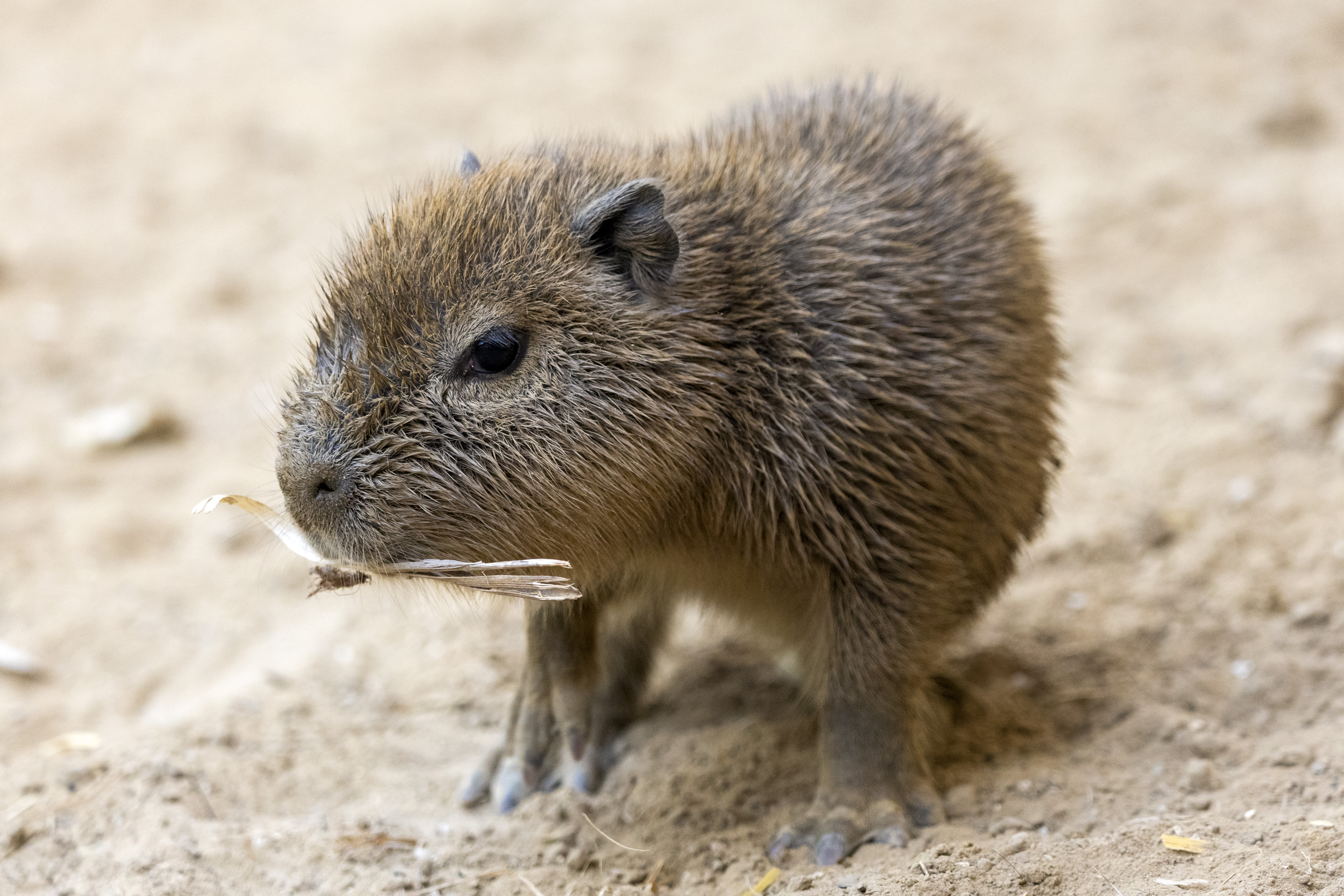
Also born at Edenya were four cubs of the world's largest rodents: capybaras. Although this species is not endangered, the young are a great opportunity to introduce visitors to social animals from South American wetlands. They follow their mother soon after birth and curiously explore their environment, always close to the safety of the group.


Edenya, the world's largest tropical greenhouse, is also home to one of Europe's largest butterfly paradises. Under a 1,500 m² dome, thousands of wings beat like beating hearts. Cobalt blue, amber, emerald and purple: each pupa carries the promise of a new, short but wondrous life. Visitors will discover morphos (Morpho peleides), passionflower butterflies (Cethosia biblis), swallowtails (Papilio demoleus, Papilio lowi and Papilio palinurus) and other tropical species from responsibly managed breeding centres in Papua, South America and Africa. Thanks to cooperation with Papiliorama in Switzerland and the international association IABES (International Association of Butterfly Exhibitors and Suppliers), this breeding is supported in a sustainable way, as an alternative to wild capture and as a source of income for local communities. The butterflies arrive at Edenya as pupae. Once they bud, their wings are fully formed and they are ready to fly, they are carefully one by one placed in the butterfly garden daily by hand.


Every birth, a precious victory
Through these young animals, rare, threatened or emblematic, Pairi Daiza reminds us that conservation relies on knowledge, international cooperation, the expertise of zoological teams and public awareness.
Behind the emotion sparked by every birth lies a broader challenge: protecting, today, species and ecosystems whose future depends more than ever on collective commitment.
At Pairi Daiza, every birth is a joy. For threatened species, it is also a precious victory.
More cute babyphotos


.jpg)


Johan Vreys